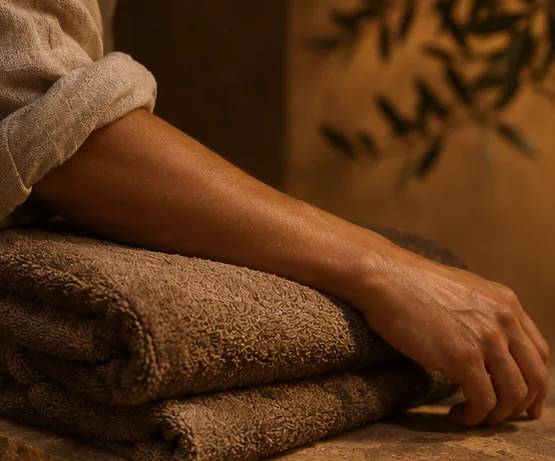
A rock climber, a goalie, and a new hiker can all request a sports massage. If they are at the same table for the same amount of time, they have three different reasons for being there. The first may want attention to his forearms, the second is interested in how it will feel when he stretches his arms, and the third just wants to rest his legs after a ride he enjoyed. The value of the term “athletic” lies in this adaptability. Here’s the guide that will help you describe your real activity and read the promises of a service correctly.
A conversation that starts with movement
The most effective first question needs no sports jargon. “What movement do you repeat the most during the week?” Someone who plays amateur badminton can talk about the racket and the quick changes of direction. A dancer will describe rehearsing in specific shoes and the points of the choreography she repeats. These answers provide more information than the statement “I exercise a lot.” They allow the professional to understand what your week looks like and what areas you want to include.
Of particular interest are changes from the usual routine. The runner who has been doing the same route for years may have tried hills. The swimmer who loves the backstroke might be preparing for a different style of relay. The musician who plays tennis on Sundays uses his hands long before he steps on the court. You don’t need to analyze the biomechanics of the movement. It is enough to describe in your own words what changed, which parts of the body you noticed the most and what you would like to feel after the visit.
There is also the case of the person who returns to his favorite sport after a long break. The memory keeps the feeling of the old trainings, while today’s everyday life can include completely different demands. If this describes you, speak in the present tense. How long is your ride now, what equipment do you use and when do you rest during the week? The information that you once played championships is interesting, but the session planning needs a current reference point.
If you close with a fellow athlete, allow time for two separate descriptions. You may have played in the same game, but one was benched for a while while the other played almost the entire game. Even with similar playing time, different role on the pitch means different moves. A shared reservation makes it easier for you to move around, while individual preferences still determine the position, intensity and pace for each of you. Agree in advance how much time you need for this discussion.
Where does a targeted session time go
In sports massage the program can be designed around a specific area or group of movements. Choice has a time cost. Half an hour divided between legs, waist, shoulders and forearms leaves little room to test the pressure at each point. The same half hour devoted mainly to legs has a completely different rhythm. Ask how the professional recommends dividing the time and what area to skip if you want more attention elsewhere. A good answer can be very simple and include only two priorities.
For example, a cyclist who spends hours leaning on the handlebars may feel more need for comfortable back and palm contact than legwork. If the professional only hears the word “bike”, he may imagine a different priority. A “I’d like to leave the legs for another time and today deal with the hands” immediately resolves the ambiguity. The sport provides the overall context and your personal experience determines where to focus attention.
Sports massage has many tensions
In service photos you’ll often see a firm grip, a forearm over a large muscle group, or an impressive stretch. The photo freezes for a second. Within the session there may be broad gentle movements, smaller areas of firmer contact and pauses to change positions. Each of these options serves a different purpose. If you came for comfort after a busy week, you have every reason to ask for a soft start and a slow transition. Your experience in sports does not determine how much pressure you like.
Some exercisers have learned to complete difficult repetitions of the workout and carry that habit over to the table. They silently wait for something that is bothering them to end. But in massage, your feedback is part of the process. You can say “I like this movement when it gets wider” or “I’d rather switch sides now”. The ability to customize the contact is maintained throughout. No personal record and no training experience obliges you to tolerate an unpleasant feeling.
Three different requests before a match
The first visitor wants something familiar because it helps him get into the fighting mood calmly. That’s where predictability matters. He knows the type of contact, the professional, and how he usually feels when he leaves. The second visitor is coming for the first time and hopes to improve his time the next day. This expectation needs discussion because one session has not been proven to be a reliable way to immediately improve performance. The third has a new annoyance and wonders if he can join. For him, an evaluation by a suitable health professional is important.
The three requests are outwardly similar, since they all use the phrase “I have a struggle.” On the phone, try to fill in exactly what you want to be decided. “I’m looking for a calm, familiar experience,” “I want to understand what the method offers,” or “I need an examination of a symptom.” This reduces the possibility of booking a wellness service waiting for a prognosis or permission to participate. The latter decision has health implications and requires a different process than selecting pressure and duration.
What researchers measured in athletes
One systematic review compared research results on manual sports massage. The researchers separately examined strength, jumping, speed, endurance, fatigue, flexibility and delayed muscle contraction. They found no immediate improvement in measures of athletic performance. They found small benefits in flexibility and grip that may follow exercise. Results pertain to groups of participants and different protocols. They do not accurately predict how you will feel or what time you will write in your next workout.
This distinction between performance and experience clears up several misconceptions. If you like spending time with your body in a quiet room, the value of this option is personal. It doesn’t require you to prove that your next jump will be higher. But if a package is sold with a specific promise of speed, injury prevention or athletic progress, you’re entitled to ask exactly what was measured and to whom. A testimony of a top athlete describes the experience of a man who has a whole team around him.
The practical side of table seating
The body that has just come off a long ride may need support in different places than the body that has spent the day sitting. For example, a swimmer may prefer to rest the hand on a pad in front of the chest instead of holding it up for a while. A walker may request that their feet remain covered until their turn. Positioning and room temperature are often the simplest changes that make a session more relaxing.
Also ask if there are passive movements or if you will be asked to participate by lifting a limb. If you’ve come expecting to stay still, such a change may surprise you. If, on the other hand, you enjoy sensing movement, you might like a brief update before each transition. If there is a rehabilitation program or a specific instruction from the specialist who follows you, mention it. The massage professional needs to know the limits that have already been set for your activity.
How to describe catching without a hasty diagnosis
The word “caught” is useful but contains many experiences. It could mean widespread tiredness in the legs, discomfort in a particular spot, or just the feeling that you could use some rest. Instead of trying to figure out which muscle is to blame on your own, explain when you noticed it and what’s bothering you. Say if it came on suddenly during a movement or gradually over the next day. If it is new pain, swelling or injury, seek medical guidance before choosing to massage the area.
In amateur sports, tips travel fast from person to person. Someone had a strong massage before a hike and liked it, another always prefers gentle contact on a rest day. Such stories provide ideas for questions. But your choice depends on your habits, the activity that follows and how you usually react to contact. The expression “it hurts a little more because I’m training” leaves out the most essential information. What do you really want to feel today?
How do you evaluate a session with your own criteria
Before you leave, think about what your original request was. If you asked for more hand time after climbing, the question is whether you got it and whether the contact was comfortable. If you wanted a quiet time between two demanding weeks, the criterion is different. You can keep in one line the areas, the duration and your own impression. This little note will help you more on your next date than an overall score of 10, because it explains what you would choose to repeat.
For information on available wellness sessions at Mansion Escape Massage in Athens, call 6946080253Mention your sport, the time you have available and the area you want attention. Ask them to describe the proposed service and confirm the price. This way you can decide if the visit fits with your own sporting routine, whether it includes organized events or a Saturday ride that you’ve been looking forward to all week.