At the after-office massage, describe shoulder fatigue in your own words and say what you would like from the visit. You might be asking for gentle care, more back time, or just a break from screens and notifications. If there is new or troubling pain, numbness, or another symptom, a health care professional is needed. The everyday word “catch” does not specify a cause.
A description to aid planning
Say how much time you have, if you’re coming straight from work and if you need to get back to work. If your main concern is the shoulders, ask how they fit into the suggested session. A different back time may suit you than what is shared in a typical full body description.
Another focus, another pressure, another rhythm
When a session doesn’t suit you, try to identify what you would like to change. The intensity of the contact, the speed of a movement and the minutes spent in an area are different elements. You may want a slower pace without more power. You may also prefer more time on your back and less pressure on your shoulders. A specific phrase helps much more than the general “a little better here”.
A useful example is “the tension is good, but I’d like to move more slowly.” A second is “let’s leave this point, I prefer to go back”. If you don’t know what to ask for, you can just say you need a break to decide. You are under no obligation to describe the difference in technical terms or to choose between sentences you have not understood.
In the guide for the pressure in deep tissue you will find more examples of such collusion. The same principle carries over to a softer or more atmospheric experience. Your information is about how you feel now. Neither the title of the service nor what you preferred in a previous appointment can replace it. If something presents as pain or concerns you, stop the specific activity and contact the appropriate health professional for evaluation.
The session between the remaining obligations
Look at the whole day before choosing a time. If you have just finished work, you need a different margin than if you are returning from training or arriving from a trip. Think change of clothes, personal care and movement. The service may have a fixed duration, but your actual availability depends on what comes with it.
Say what time you absolutely must leave. If that limits the choice, ask for a proposal that fits comfortably. A more focused session may serve your purpose better than a long one that ends right on top of another obligation. If you still have a free afternoon, choose what you want to do next without feeling obliged to add more benefits.
In case of a change in the program, send a clear message with the time you can now arrive. Ask how the available session is affected and what other time is available. If you have an advance payment, please refer to the agreed terms. Solving before the ride lets you choose with peace of mind. You don’t have to make a decision under pressure at the entrance of the venue, when the time you thought you had available is already running out.
Comfortable position before time begins
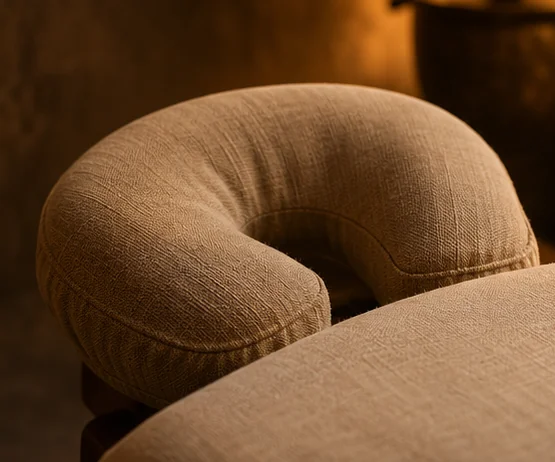
Take some time to find where your head rests comfortably, where your hands can reach, and whether you can stay in the suggested position. The first position need not be made a permanent choice for the entire session. You can ask to stand up, use a different prop or discuss an alternative if it is suitable for the particular service.
If the change of position makes it difficult for you in practice, explain it before the visit. The business needs to know what is required for its space and equipment. If it is a medical restriction, follow your healthcare professional’s instructions and ask for clarification on what is allowed. The title of a service does not in itself determine which positions are suitable for you.
Also think about how you will communicate from your position. If the face rests on a headrest, you may prefer less music or more frequent short questions from the practitioner. You can sit for the conversation and then lie down again. Look at him too massage table seating guide, so that you have the practical questions about support, access and switching sides ready.
Little preparation for more comfort
Keep appointment confirmation and venue contact information easily accessible. Wear or take clothes that make it easy for you to change and leave without rushing. If you have a personal preference for skincare products, think about what you really need and confirm what the company provides. A small bag with a specific purpose is more practical than assuming you have to carry a whole gear.
If you’re coming home from work, organize where your bag, jewelry and cell phone will stay while you get ready. Ask about the storage area, especially when you have an item that you don’t want to leave exposed. You can turn off notifications or let anyone who is waiting for you know that you will reply later. If you need to be available for a specific reason, discuss how a possible interruption will be handled.
O guide to what you take with you to the massage includes examples depending on your program. The most useful preparation is often a straightforward question, such as “I will need to return to the office immediately, how much time do I have for a change?”. The answer may affect when you close more than a long list of items you won’t end up using.
If you still carry your day along
Even if you arrive with a computer bag, frequent notifications and a little mood for other explanations. You can ask for a focused initial discussion and then silence, with short questions only when something essential changes. The information is about how to communicate and can make the experience more comfortable without additional service.
If the problem is that you have a hard time getting comfortable on your face, say so before intercourse begins. He asked to discuss the support or alternative position available. Don’t expect most of the time to be spent counting when to get up. In the next reservation, keep two observations, which area you wanted to be emphasized and which practical condition helped you to leave behind the pace of the office for a while.
Getting ready, showering and changing time
Ask what items are provided and what time you need to calculate if you want to use the shower. On Mansion FAQ showers, towels, disposable slippers and toiletries are listed. The practical organization of their use requires confirmation of your visit, especially if you have booked a short stay or if two people are coming.
If you use a specific personal product, take it with you if it serves you and ask where you can leave it. Calculate the time to dry off, get dressed and gather your things. A precise next obligation needs this margin. If the exit time is decisive, tell the reception before the session starts.
Design the series that suits you based on the product to be used in the care. Ask if there is a relevant instruction of the product or procedure, without assuming that every type of massage has the same rule. To shower guide before or after massage you will find practical questions about the reservation. Personal preference for skin feel and the need to get back to work are equally useful elements to organize overall time.
Light, sound and sense of the room
The same space may seem calm to one and busy to another. Think about what affects you more, the light, the music, the smells or the sounds from the corridor. If it is something decisive, say so in the first communication. A venue can easily change the music but have constant lighting, or offer a different room only at certain times.
Give a specific example. “I’d like to hear what you’re saying clearly” is clearer than “some music”. “I want to be able to see the door easily when I open my eyes” explains a need better than the general “it shouldn’t be too dark”. You don’t have to imitate the image of an advertisement with candles and heavy curtains. Atmosphere has value when it serves the person in the room.
You can request one adjustment at a time and see if it suits you. If the music turns down but you’re still having trouble communicating, an additional change is needed. If an aromatic element is removed but the smell remains, say what you notice. Clear feedback helps the practitioner understand what element is affecting the experience. For more targeted preparation, there is also session audio guide.
How do you turn an expectation into a clear request
Before choosing, think about what you would like to remember from the visit. The answer may be about a sensation, like having time without distractions, or a very practical condition, like knowing when to change seats. The more specific it is, the easier it is for the venue to tell you if it covers it. The phrase “I want something good” leaves a lot of room for interpretation. The phrase “I want a slow pace, gentle pressure and an explanation before each change” describes a real choice.
It is also useful to name a priority. If you list ten equal requests in one short session, you may find yourself expecting more than you can fit. Choose what is most important today and ask how the available time will be organized around it. The rest can be discussed as preferences. This series also helps when comparing two services with impressive but obscure titles.
After the discussion, repeat in your own words what you understood. For example, “so we’ll stay in this area, at this pace, and we’ll decide together if I want a change.” If the answer confirms your own proposition, you have a common starting point. If a correction is needed, it is done before the session begins, when you still have all the time to decide. No previous experience or knowledge of techniques is needed to describe what makes you feel comfortable.
Leave room for the return as well
When you arrange the day, note what obligation follows, and how strict it is. A free ride afterwards allows for a different leeway than a specific business appointment. He asked when the preparations for departure were expected to be completed. This way you choose a duration that fits into your day without having to constantly check the time during the session.
After care, take as much time as you need to orient yourself in the space and get ready comfortably. If you feel something bothering you, let the professional know before you leave. If you need medical advice, seek it from an appropriate healthcare professional. There is no universal number of minutes that describes what each person needs after each service.
For commuting, think about what practically serves you that day. If you have come with a friend or partner, agree on where to meet afterwards. If you have left things at the reception, collect them before arranging the next route. O post massage organization guide explains how to create a small window of time without arbitrary rules or promises about how you should feel.
Organize your own visit
For information on available options, see Mansion Escape Massage related page and confirm the procedure, duration and what is necessary for your own comfort.