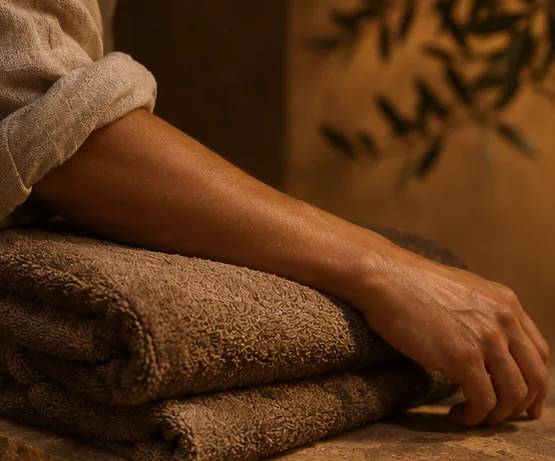
For unscented massages, the request needs to cover the product, fabrics and room. Ask if there are room fragrances, candles, strongly scented towels or other product to be used near you. Choosing an odorless oil does not by itself answer what smells in the room. If you have a known allergy, you need proper advice and accurate product testing.
A clear message before booking
Write ‘fragrance avoidance is essential for my visit, what can you arrange?’ If it’s just a preference, you can clarify. Let the space tell you what is really possible, especially in a room where other sessions have preceded it. The answer should be about your own date and not a general description.
Which product touches your skin
Before applying a product, you can ask for its name and see the label. If you’re mainly interested in smell or texture, say so. If you have a known allergy or have received medical advice, the decision about suitable products needs to be based on this information and appropriate professional advice. A photo of the vial or the phrase “it’s natural” is not enough to assess a particular sensitivity.
Preferences may also concern what is used in the room. Ask for clarification on room fragrances, towels and products applied to the other table if two people are going. If odor avoidance is necessary, make it a condition of the reservation. The venue should tell you honestly what they can prepare, especially when there have been other sessions on the same day.
If you propose to bring your own product, ask if it is accepted and if it fits the specific procedure. It is not a given that every technique can be performed by any means. If there is no suitable option, you can look for another form of care or another day. The fragrance-free massage guide explains how to send a clear request without confusing scent preference with a blanket promise of suitability.
Light, sound and sense of the room
The same space may seem calm to one and busy to another. Think about what affects you more, the light, the music, the smells or the sounds from the corridor. If it is something decisive, say so in the first communication. A venue can easily change the music but have constant lighting, or offer a different room only at certain times.
Give a specific example. “I’d like to hear what you’re saying clearly” is clearer than “some music”. “I want to be able to see the door easily when I open my eyes” explains a need better than the general “it shouldn’t be too dark”. You don’t have to imitate the image of an advertisement with candles and heavy curtains. Atmosphere has value when it serves the person in the room.
You can request one adjustment at a time and see if it suits you. If the music turns down but you’re still having trouble communicating, an additional change is needed. If an aromatic element is removed but the smell remains, say what you notice. Clear feedback helps the practitioner understand what element is affecting the experience. For more targeted preparation, there is also session audio guide.
What information do you need to share
The type of service you are interested in, the desired day and any practical features that are necessary are usually sufficient in the first message. If you want to discuss something personal, you can request a private phone call or a few minutes in the space. You don’t need to describe sensitive details in a public comment to find out a price or an available time.
A useful wording is ‘there is a preference I would like to discuss directly with the practitioner’. Ask who will receive the information and if you need to repeat it upon arrival. If it is a health issue, the appropriate interlocutor for a clinical decision remains your healthcare professional. The reception can explain the process and the practical possibility of adaptation.
If you are accompanied, decide which parts of the conversation you want to be done individually. The attendant can help with communication without necessarily answering for you. The same applies to a person who arranges the reservation as a gift. It can convey scheduling information, while personal choices for the session are confirmed by the person who will be participating. This way, misunderstandings are reduced and it remains clear who gives the final answer about their experience.
When a nice description leaves practical gaps
Words like “holistic,” “deep,” “premium,” or “ritual” often describe the aesthetic and philosophy of a service. For your selection, you also need information that you can use. Ask where the session is taking place, what body position to start with, if any product is used, and if touch or movements are adjusted. An example from the beginning of the process gives a clearer picture than yet another blanket promise of relaxation.
You can ask them to describe the first ten minutes. There will be a talk beforehand, there will be time to prepare yourself, the coverage will be explained and how do you request a change? The question does not require any “secret” technique to be revealed. It’s about your own participation in the experience. If something is critical, such as avoiding perfume or keeping a certain area covered, mention it right away.
Also kept the difference between general description and availability. The page explains what the business’s product is. The response to your request confirms whether it can be offered on your terms that day. If there is any ambiguity, ask for a brief written clarification. Read the answer in the order of your own questions. If something essential is not answered, the nice overall impression does not cover the gap in the organization.
If the smell persists despite changing the product
Imagine that the oil is indeed unscented but the room has a strong odor from previous use. If the condition makes it difficult for you, say so before the session begins. Ask if there is a suitable solution or possibility of other programming. Don’t think you have to wait to get used to it.
If you are going with two people, the agreement also concerns the second table. Another person’s preference for a scented product affects the shared space. Discuss this before choosing a common room. After the visit he noted what specific elements needed to be prepared so that the next request would be clear. The same phrase “unscented” can be interpreted differently, and an accurate description saves time and confusion.
Little preparation for more comfort
Keep appointment confirmation and venue contact information easily accessible. Wear or take clothes that make it easy for you to change and leave without rushing. If you have a personal preference for skincare products, think about what you really need and confirm what the company provides. A small bag with a specific purpose is more practical than assuming you have to carry a whole gear.
If you’re coming home from work, organize where your bag, jewelry and cell phone will stay while you get ready. Ask about the storage area, especially when you have an item that you don’t want to leave exposed. You can turn off notifications or let anyone who is waiting for you know that you will reply later. If you need to be available for a specific reason, discuss how a possible interruption will be handled.
O guide to what you take with you to the massage includes examples depending on your program. The most useful preparation is often a straightforward question, such as “I will need to return to the office immediately, how much time do I have for a change?”. The answer may affect when you close more than a long list of items you won’t end up using.
When is the reservation complete?
A question about availability is the beginning of communication. Finalization needs a clear answer for date, time, service and cost. If you have sent a preference, make sure it is forwarded to the person who will be welcoming you. Keep a message with all of these in one place so you don’t have to search for information in different conversations.
At the Mansion the frequently asked questions explain that visits are organized by appointment and give the means of communication. If you request a specific day or feature of the session, wait for confirmation. An automatic receipt message or message read indication does not yet contain this information. You can ask if you need anything extra to reserve the time.
If your schedule changes, contact from the same thread where the confirmation was made. Write which reservation it concerns and which change you request. A second independent chat can be confusing, especially when more people answer the slot. O same day booking guide explains how to organize a quick visit while maintaining the same necessary clarifications. A little clarity before you start allows you to arrive with a real picture of the date.
Preferences, limits and pre-contact agreement
A preference tells what you like and a limit tells where your permission stops. You can express them just as simply. “I’d rather hear a few instructions” and “I want the belly to stay covered” are two different, complete pieces of information. They don’t need an excuse. Say them while you’re still dressed, so there’s time to agree how they’ll be implemented.
Initial consent is about what you understand and accept at that time. If the sentence changes, ask for an explanation first. If your mood changes, you can revise. An old visit, choosing a longer duration or the fact that you paid does not replace today’s conversation. The practitioner needs your response, especially before a change that affects coverage, position or type of contact.
If you have trouble talking about a preference, write it in one sentence before you leave the house. You can read this sentence or show it privately. If you are accompanied, think about whether you want to discuss it without the escort present. Comfort in communication is part of the real quality of the visit. Notice if the answer becomes specific and if the person doing the session gets the information so you don’t have to repeat it after you lie down.
Cover and privacy without embarrassing cases
Coverage is best discussed before you switch. Ask what cover is used, what clothing you can keep and how non-session areas will remain protected. The question is practical. You don’t have to follow a habit because a friend made a different choice or because a photo shows a certain way of preparation.
When you need to change position, ask for instructions before moving. It may help you to hold the cover yourself, to pause, or to remain temporarily seated. The venue must explain what it can organize safely for your own movement and with respect to your privacy. If a sentence leaves you unsure, ask them to describe it while you’re still dressed.
For more detailed examples read how to cover the body in massageKeep your own wish to a clear phrase, such as “I would like this area to remain covered throughout.” If another provision of care needs to be implemented, it is best to find out before booking. That way preparation isn’t based on the expectation that you’ll get used to something once you’re in the room.
Organize your own visit
For information on available options, see Mansion Escape Massage related page and confirm the procedure, duration and what is necessary for your own comfort.