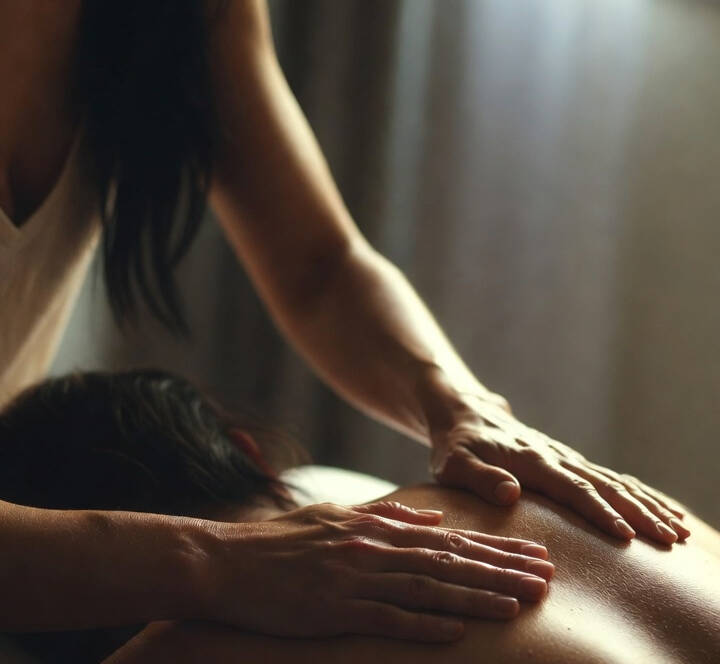
If you have a specific goal, such as devoting the session mainly to the back, thirty minutes may be a practical option. If you want a full body massage, the sixty minutes give a different margin of distribution. Seventy-five is worth it when you know where you want the extra time to go, for example at a slower pace or in an area usually left for last. On Mansion FAQ these durations are mentioned. When you book, confirm which ones are available for that service and if the time starts with arrival or with the start of the massage.
Two watches for the same visit
The visitor’s clock counts from the moment he leaves the previous appointment to the moment he arrives at the next destination. The service clock can only count the time on the table or a scheduled time that other actions must fit into. This difference explains why a seemingly simple question, “do I get a massage on my break?”, is not answered by just looking at the minutes in the directory. You need to calculate the route, the reception, the change of clothes and the time you want afterwards. If it is your first visit, leave room for your own questions.
Imagine you have exactly one hour available door to door. If the route takes ten minutes in each direction, you have forty minutes left for what will happen inside the space. A sixty minute service is not enough, even if they are waiting for you exactly when you arrive. A targeted thirty minute session may be fine, provided it has been confirmed how much time you need before and after. This is a hypothetical programming example. The actual travel time in Athens depends on the time and place from where you start.
When does half an hour make sense?
A half hour is best organized around a clear priority. You may want to devote the available time mainly to the back, get to know a new place without filling the whole afternoon, or choose a short break between two obligations. Duration does not force you to accept faster moves. If you prefer a slow pace, ask for a shorter session. You may come away more satisfied from half an hour with a clear goal than from trying to fit all the areas into a strict schedule.
To see if it suits you, complete the phrase “if today there is time for just one thing, I want to…”. If the answer is “to have time on the back and shoulders”, you can say it on the phone and ask if it is covered. If the answer grows as you speak to include back, legs, arms, a quiet start and a shower at the end, this is a sign that you are asking for more than you bargained for. You don’t have to add money if you don’t want to. You can choose what is important today and leave something else for a different occasion.
Short visit and first acquaintance
Some choose the shortest duration because they don’t know yet if they like the massage. This can work as a first acquaintance, as long as you don’t sacrifice getting along at first. Let them know that you are coming for the first time and ask if you need to arrive a little earlier. Consider that you might want to see the space, learn how to cover with a towel, or explain a preference without constantly looking at the clock. The short term is about the choice of service. You still deserve time to understand and decide.
What an hour allows you
Sixty minutes is a useful starting point when you want care in more areas and want to leave room for small adjustments. But the word “full body” does not say how the time will be divided or if all the areas you have in mind are included. Ask what is meant by space and say what you would like to omit or where more attention should be paid. “I’d prefer a little more time on the back and I don’t care about foot care” is much more helpful than “do a little bit of everything.”
Think of a typical workday where you have left the afternoon blank. You want to spend time in peace, but you don’t have an area that concerns you the most. In this case you can choose the duration based on how you want the experience to flow and how comfortably it fits into your schedule. Conversely, if you’re asking for a targeted session with different pressure per area, say so before automatically considering the time as enough. In the guide for pressure in deep tissue you will find how to distinguish the intensity from the rhythm and the time of staying in one place.
Where does the extra fifteen minutes go
The difference from sixty to seventy-five minutes becomes valuable when something specific about you changes. Maybe you like slow transitions and the hour-long session feels like it’s coming to an abrupt end. Maybe you want to divide the time in more areas without compressing your priority. Or maybe you just want a longer break on a day off. Before signing up, ask how the extra minutes are used in that particular service. A longer duration does not guarantee a different technique, more benefits or a specific health result.
If the answer is that the session is adjusted, give a direction. “I’d like the extra minutes to go on the back, without changing the volume” is clearer than “I’ll take the big one”. If the only reason you’re considering the bigger option is that the price per minute seems lower, look at the total amount you want to spend. Time spent waiting to catch the next appointment hardly serves the purpose of the visit. Let price and minutes help you decide along with your actual goal.
If the minutes include additional provision
In a description with hot stones, wax, or other element of the experience, he asked whether time is about the whole process. If you envision an hour massage plus extra time for some ritual, while the company means one hour total, you have different expectations before you even meet. You can ask “the duration you mention includes this part?”. To list of special treatments you will see different experiences that you can discuss specifically. A space-time allocation example has more value than a name-based assumption.
If two people go together
One more clarification is needed for a couple. Do the minutes belong to everyone separately and at the same time, or are they shared sequentially? “Sixty minutes to two” can be read differently when the message is short. Ask what time each person’s session starts, if you’re finishing together, and how much time to estimate until check-out. THE guide to simultaneous massage for two also explains the difference between common space and common time. You may want adjacent tables and the same duration without wanting the same intensity or technique.
When one has a tight schedule afterwards, decide in advance if going out together depends on leaving exactly together. For example, if one has to go back to work and the other has the afternoon off, a shorter session together may be more convenient than a long one that leaves one watching the clock. If you still want to stay longer in the space, ask how the available services work after the appointment. Just because the massage ends at the same time doesn’t mean you need exactly the same amount of time to get ready.
Three questions before you confirm the duration
The first is “what is the arrival time and what is the expected departure time?”. With it you organize your day. The second is “what do we comfortably catch up on if I want to prioritize here?”. With it you control the relationship between the goal and the duration. The third is “what is the final cost for this duration and this service?”. With it you avoid comparing dissimilar sentences. If the answers cover what interests you, you have enough information to book without having to choose the biggest or most expensive package.
There is also a question that is only worthwhile when it concerns you. What if you’re late? Especially when arriving from another area of Athens, a small delay can change how the available space is used. Ask the business when you need to notify them and what their policy is. It is not safe to assume that a late arrival also moves the end time. If you inform early, you can decide if a more targeted session is in order or if it is better to find another time with the convenience you wanted.
What you learn about duration after you try
After the visit, instead of just noting how many minutes you bought, think about how they were used. If you liked the care but would like more time in one area, it might be enough to ask for a different allocation next time. If the appointment went well but you were in a hurry to get back, maybe a different time of the day is better for you instead of a different duration. If from the beginning you preferred a small, specific session and got tired of the longer one, keep this observation. The best duration for you may change depending on the situation.
One last trick is to write the next reservation as if you were explaining it to a friend. “I chose one hour, because I want a full body session with more time on the back, and I’ve left a gap after.” Or “I chose half an hour, because I want a short stop before returning home and I’m mainly interested in the shoulders”. If your proposal makes clear sense and really fits into your schedule, the choice is usually easier. You don’t have to copy your partner’s preferred length or follow an advertisement that presents more minutes as self-evidently better.
If you communicate in writing, keep the answer next to your diary. For example, write ‘arrival’, ‘session’ and ‘departure’ separately. So if another obligation is moved, you can immediately see if the appointment is really affected or just the margin of the route. A schedule change doesn’t force you to hastily decide between three durations all over again.
To confirm which options are available on your date, see how do you make an appointment at Mansion and mentioned together the available exit time and the area where you want emphasis.