The most famous photo of hot stone massage shows a row of black stones on a back. It leaves out the most interesting part of the experience: the moment the practitioner takes a smooth stone in hand and moves it. The visitor feels a warm surface passing from the shoulder to the arm, then the palm follows and finally the contact changes direction. This rotation shapes much of the session. If you’re thinking of trying it, it’s worth knowing which job the stone takes on, which one stays in the hands, and how you describe the experience you’re looking for.
Two different roles for the same material
The motion stone is used as a tool. The professional holds it and determines its course, pressure and pace. Its smooth side can cover a lot of surface, depending on its size and position. The setting stone serves a different purpose. It stays temporarily in a selected spot, with suitable protective material between the stone and the skin, while the hands work elsewhere. The difference is substantial. In the first case you feel a route. In the second you perceive a source of heat which remains constant while your attention may be in another area.
The two uses do not necessarily appear together. One can offer massage with moving stones without leaving any on the body. Another briefly incorporates placement into a larger hand massage. When comparing catalogs, the question “do the stones participate in the movements or are they mainly used in stance?” it clarifies more than a photo. If you like the idea of a warm ride but don’t want weight on your back, you already have a clear request to make.
How the contact between the palm and the stone changes
The palm adapts to the shape of the body. The fingers open, the contact surface changes as the hand passes over a shoulder, and the movement can end in a soft grip. The stone retains its shape. When the professional changes its angle, the part that touches the body also changes. A wide surface gives a different impression than a narrower curve. If you are bothered locally, useful information is “here I prefer the palm”. Switching tools can do exactly what you want without interrupting the session.
Think a stroke in hand. The first contact helps you understand where the professional will move. This is followed by a pass with a stone and then a return with the hand. Even if everything happens at the same speed, the three moments have a different character. In the first you orient yourself, in the second you distinguish the heat and in the third you perceive more clearly the shape of the palm. There is no reason to favor all phases equally. By mentioning which one you liked best, you help shape the rest of the date.
How to set up a streaming session
A reasonable principle is to agree on which areas you want contact and which will remain covered. Then the pro can start manually so you can get to know their rhythm, and move on to the stones when you’re comfortable. You will come across other sequences as well. The essential thing is to know when the hot tool is inserted, where it will be used and how it can be removed. Especially with the face facing the headrest, a brief warning before first contact can make the experience calmer.
Transitions between tools require short pauses. A stone is removed, another is selected, the practitioner checks the heat and returns. Good organization of space makes these pauses predictable. If you were expecting absolutely uninterrupted contact, you might appreciate a classic massage more. Conversely, if you like to sense when the material changes and when the hands return, the same pauses can become part of the rhythm. This is a useful distinction that is often lost in descriptions that are limited to the word “relaxation.”
What oil, fabric and support add
A product that allows the stone to slide smoothly can be used in passages with movement. The fragrance and composition of the product are separate choices from the use of the stones. If you have a preference for a neutral product, mention it when you check out. If you want your hair or palms to remain clean, say so before the ride begins. It’s easier to skip an area in the first place than to try to remove the oil when you’re ready to leave.
Cloth does two different jobs. Covers non-massage areas and acts as a barrier to setting stones when needed. A towel that is simply used for coverage does not in itself mean that the equipment is suitable for every form of use. Selection, control and monitoring of equipment are the responsibility of the professional. Your role is to report how you feel and ask for immediate removal if something bothers you. You don’t have to wait for a pass to complete.
Three different appointments with the same name
In the first example you mainly want hand massage. You like the feel of the hands and would like to get to know the stones in a few passes on the back. A service that describes them as an optional add-on is right for you. Ask how much of the duration this addition takes up and if the agreed price is changing. So the choice is based on the actual time ratio. The more expensive or longer session might just involve more use of a tool you only want to try.
In the second example the moving hot stone is the main reason you close. The photo of the space shows static placement, but the text gives no other information. You can say “I would like the stone passages to be the main part of the massage, especially on the back and arms”. Instead of asking for increased intensity, you have described exactly what you want increased. The professional can explain if he offers this version and tell you what duration a complete route allows.
In the third example you try the stones and discover that you prefer hands. This is a perfectly useful result for a first visit. It asked to continue manually and leave the stones aside. If you have expressed this possibility in advance, you know if the venue can accommodate the session. The point is to describe the real difference: “I like that the palm follows the shoulder” or “the close contact of the stone constantly catches my attention”. Thus the change becomes concrete.
When is it worth asking for another experience
When one has a reduced sensation of heat in an area, one’s personal feeling of comfort is not sufficient to judge safety. Inform before booking and seek guidance from a health professional if there is a relevant health problem. A session without heat may be a more appropriate option. The same is true when there is recent trauma or irritated skin that needs evaluation. Talking to a wellness service can’t determine the cause of symptoms. If you feel a burning sensation, ask for the stone to be removed immediately, even if a moment ago the temperature seemed pleasant.
If you’re primarily looking for deep or localized pressure, consider this target regardless of heat. A pass can be hot and at the same time very soft. Another may seem too intense to you because the contact is concentrated in a small spot. Whether you want more or less heat is a different question than whether you prefer wider or lighter contact. Two brief remarks, “the heat is good” and “I want a lighter hand here,” are usually enough to make the appropriate change.
How it compares to other hot massages
In hot oil massage the heat is mainly transferred through the product and the palm. In wax massage, when a suitable product is used to apply to the body, the sensation is also associated with the texture of the melted material. A distinct, solid surface remains recognizable in the hot stone. If you remember an old experience and try to find it again, think about what element you have left. Was it the smooth oily texture, the steady presence of the palm, or the passage of a smooth object? Based on this answer you can read a catalog much more easily.
What the organization of space reveals
Notice where the clean stones are and where the ones that have already been used end up. It is not your job to inspect the equipment. But it is reasonable to ask how the stones are cleaned between appointments and how their temperature is monitored. A professional can describe the process in everyday words. The answer “we check each stone before contact and explain when its use changes” gives you more information than a vague comment that customers are usually comfortable with.
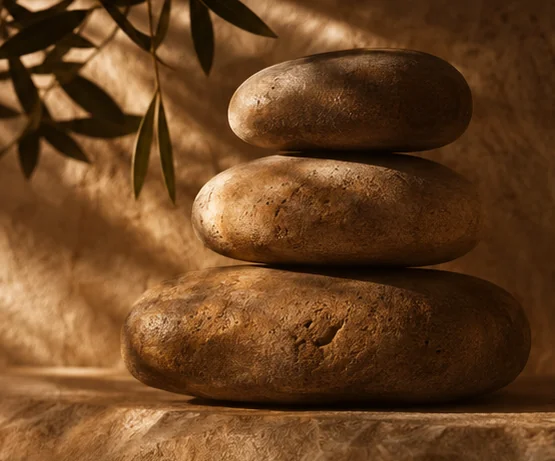
Sound is also important. In a quiet space, two stones resting on each other immediately attract attention. Some visitors find this little sound pleasant because they understand that the next move is being prepared. Others want as little auditory stimuli as possible. If you are in the second group, you can request that the stones rest on a soft surface a little further from the headrest. It’s a small adjustment, sometimes more important to your peace of mind than the choice of music. If you still want to watch what’s going on, ask to see a stone before you lie down. Its shape and smooth side will make the description of the movement easier to understand before starting the first pass on the back.
What to keep for the reservation
Before choosing an appointment, ask for a description of the ratio between the hand massage and the stones, the areas included and the possibility of adaptation along the way. If you are reading about the method for the first time, the American Massage Therapy Association has materials on how to communicate when using hot stones. To discuss available massage experiences in Athens with Mansion Escape Massage, call 6946080253If you are specifically interested in hot stone, please confirm availability and explain what feature you want your session to have.