Two travelers return from Bali and describe their favorite session. The former remembers hot oil and a slow movement that started low in the back and went up to the shoulder. The second mainly remembers constant local pressures and the careful change of position of the arm. Both booked a Balinese massage. The difference in their descriptions shows why the name only makes sense when accompanied by little information about the technique. In modern Bali spas you find different ratios of gliding, pressure, kneading and movement. This very range is the most interesting feature of the method.
What we learn from the directories in Bali itself
If you read the directory of a venue in the Jimbaran area, you may come across a full-body program with long arm strokes, skin rolling and palm or thumb use. On the menu at the Four Seasons at Jimbaran Bay, for example, the Bali Restore service is described with this combination and offers a choice of different oils. In the same destination there are also programs where the Balinese massage is done without oil and is part of a larger treatment. The practical conclusion is simple. Even in the place with which the name is associated, the venues explain separately what each version offers.
This is especially helpful when looking for a similar experience in Greece. The reference to Bali may describe how a practitioner was trained or the influence behind a current program. It can also indicate the atmosphere of a complete treatment. Before you choose, read the verbs in the description. Does he say that the hands slide, push and change position on the body, or does he devote all the space to flowers, lights and music? The first words help you imagine what you will feel. The rest describe the environment in which it will happen.
The rotation that gives character to the session
A longer palm path connects two areas. You may initially feel the contact over a larger area of the back and then notice that the movement slows down around the shoulder. At that point a firmer pressure seems stronger, even if the practitioner did not increase the force much. Changed the contact surface, the dwell time, and the way you expected the movement to continue. The interest often lies in this transition. That’s where you find out if you prefer the pressures to last or if you enjoy getting back on the open track more.
When skin rolling is described, the contact becomes more superficial and local. One may love the deeper kneading on the shoulder but not enjoy that feeling on the skin. The difference is completely understandable. Explain where in the sequence you felt comfortable and where you would like to change. A phrase like “steady palm suits me, I’d rather skip the skin-raising motion” is accurate without requiring any knowledge of jargon. The professional has clear information to preserve that part of the experience that you like.
Where is the tension when the tempo is slow?
Slow speed and light pressure are two different options. In Balinese massage you may encounter a slow pace with steady contact. If what you are looking for is a very soft touch from start to finish, please say so before booking. If you love the lively switch between gentle sliding and noticeable pressure, describe it just as clearly. That a service is viewed as relaxing does not alone predict how intensely you will locally experience certain manipulations.
Imagine the professional working the back and reaching close to the shoulder blade. The same pressure that was pleasant a little lower now makes you shrug. The request “less here, keep the rest of the back as before” avoids a common misunderstanding. There is no need to tone down the entire body because one area wants something different. In the same way, a satisfactory change on one side does not necessarily mean that you want exactly the same on the other. Just speak up the moment you realize the difference.
Oil as a technical material
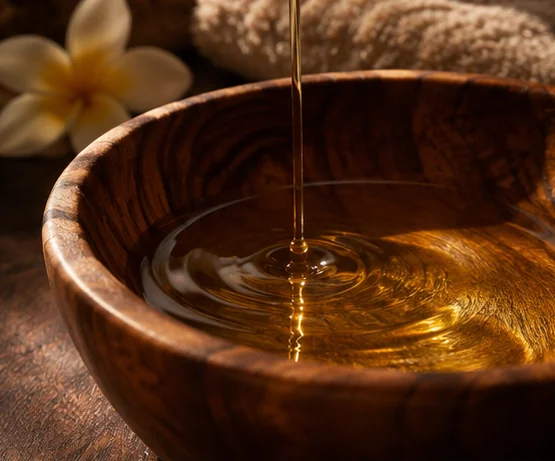
The first question about the oil is usually about the aroma. It’s also worth thinking about texture, quantity and where it will be used. A product that leaves a stable glide helps long movements to have continuity. Local contact may require different manipulation so that the palm stays where the practitioner wants it. That’s why a visit with more oil does not necessarily mean a richer experience. The right amount depends on the technique, the area and how you want your skin to feel afterwards.
The word “coconut” in a catalog may refer to the base oil or the fragrance of a blend. If it matters to you, ask to see what product is being used. The same goes for sandalwood, ginger and other aromatic references. Not every Balinese session has to be heavily scented. If an odor in the air bothers you, discuss the room’s fragrance as well. A neutral oil on the skin doesn’t change the fact that a strong blend diffuser can work next to the bed.
How experience changes when ritual is involved
A spa visit can start with a foot bath or end with a body treatment. These additions are of interest to anyone who wants to spend time in an unhurried space. For someone who only wants a hand massage, they really change the value of the reservation. Ask how long the massage lasts in the total time and what amenities are optional. A difference of fifteen minutes in two catalogs may refer to a separate treatment step, while the actual contact time is the same.
See a specific example. You have a free afternoon and want to enjoy switching materials. The application of a body mask after the massage may be the element that will make you prefer the longer program. But if your mind is on the hand movements and the work around the shoulders, the waiting time with the mask may seem irrelevant to your goal. Both options make sense when you read the service as a series of specific stages. So you can decide which one you want to have the most weight.
Balinese, Swedish or Aromatherapy Massage
In Swedish and Balinese you may encounter long glides and kneading. If you’re interested in the difference, look up how the particular practitioner uses localized pressures and whether they incorporate limb movement. A description that emphasizes this alternation will inform you better than a generalization about an exotic experience. Also remember what you liked about a previous massage. If it was a long uninterrupted ride from waist to shoulder, say so. The professional can tell you if this takes up a substantial part of his version.
In aromatherapy, the scent is often a central reason for selection. In Balinese it can function as an accompaniment to a technique that would be interesting without it. If you’re torn, try a hypothetical question. If the same massage was done with unscented oil, would you choose it again? If the answer is yes, you are probably mainly attracted to the pace and pressure. If the element you would miss the most is the aromatic route, it might be worth comparing the available mixes and their application method before choosing a service.
Which image really helps you choose
A photograph of flowers on the surface of the water creates an expectation of atmosphere. A photo of the actual room gives you different information. You see if there is space next to the bed, where you leave your things and how privacy is maintained. In a double room you can see if the two beds are close or separated by a screen. If there is no image and these elements influence your choice, ask for a description. A good photo explains a practical detail beyond making the visit look enticing.
Especially when organizing a gift, it’s tempting to choose the most impressive image. A better starting point is to remember what kind of contact the recipient enjoys. Does he like constant pressure? Has he mentioned that perfumes tire him or that he prefers a short visit? A flexible gift certificate that allows choice of oil and duration can give him more room than a pre-set schedule. Please confirm in advance whether such changes are permitted and whether the price changes when any stage of care is replaced.
To make better use of the service description, you can request a simple example from the session path. How does the contact start in the calves and how does the professional move from there to the back? The answer will reveal whether the program is based on sequential areas or whether it seeks more continuity from one end of the body to the other. The distinction is of particular interest to anyone who tends to wake up from their relaxation every time the towel is lifted or the side the practitioner is working on changes.
The same question is worth asking for the end. Some want a clean transition with a towel and time to get dressed, others are happy when the session closes calmly with a little palm contact. If you wear jewelry, you can decide in advance where to leave it when the hands are worked. If you’re going to touch a cell phone or steering wheel afterwards, ask for a clean towel to wipe off the excess oil before you leave.
What to ask for in a reservation in Athens
For your first conversation try a sentence that joins the nouns. “I would like a full body massage with big movements, some firm pressure on the back and oil without a strong smell. What is the closest available option?’ So the site has enough information to answer specifically, even if it uses a different name. To see which session suits your preferences at Mansion Escape Massage in Athens, call 6946080253 and confirm the content, duration and final cost before booking.