When looking at a photo of a Thai massage, the eye often goes to the spectacular position the body has taken. But if you watch the whole meeting, you will notice something more subtle. The practitioner changes position around the visitor, staying briefly in one area, releasing the pressure and waiting before moving on to the next. This dialogue between contact, movement and pause explains why traditional Thai massage has such a recognizable character. It also explains why the same description in two catalogs can correspond to quite different experiences.
What does the name Nuad Thai mean?
Nuad Thai belongs to the living traditions of Thailand. In 2019 it was registered in the UNESCO Representative List of the Intangible Cultural Heritage of Humanity. Recognition is about a knowledge that is practiced, taught and transmitted within communities. For today’s visitor it matters what exactly this event describes. An international organization recognizes the cultural value of the practice. A specific venue using the designation still needs to explain its own training, approach, and options it can offer.
The UNESCO description mentions rural communities and the care residents sought after physical labor. It also records the formation of an organized knowledge system and the collective efforts to revitalize it. This story changes the way we read a modern advertisement. Behind the stunning snapshot are everyday life experiences and people who took the time to convey them. A good conversation with a professional can start right there. What did he learn in his school and what element of this teaching most determines the way he works today?
The geometry of session
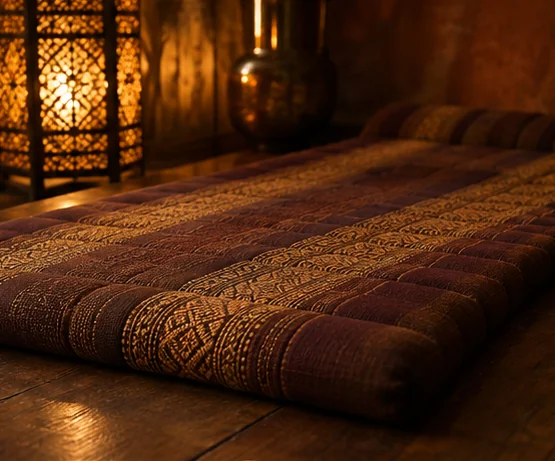
On the mattress the person receiving the massage and the professional share a low level. There is room to change sides, shift the trunk and different contact directions. This has a tangible effect for the visitor. Pressure can come from above one moment and from the side the next, with the body being supported differently each time. A slight change in knee or arm position can make the same contact seem completely new. So the session maintains variety even when moving at a leisurely pace.
Low position also affects session login and logout. For someone who often sits on the floor, a mattress can be a very natural choice. For someone who has difficulty lowering or getting up, the same image raises a practical question. Does the space have adequate support? Is there a table version? How does the program adapt to this situation? The more specific the answer, the easier it will be to judge whether the conditions allow you to enjoy the session you see in the catalog.
Rhythm can be heard even in silence
A steady pressure has a beginning, a duration, and an end. The way the practitioner moves their hand away affects the feel as much as the way they touch it. Try to remember a time when someone suddenly dropped an object you were holding together. The sudden weight change makes you react. Something similar explains why smooth transitions are so important in an edge-supported session. A sense of continuity arises from small predictable changes, often without much discussion.
Silence, of course, acquires value when you feel free to break it. If you want to know what’s next before your position changes, say so before you start. You can agree to a brief warning, such as “I’ll support your leg,” and then return to the calm pace. This way you avoid trying to guess whether you should help, move alone or stay where you are. Especially on the first visit, this small clarification allows you to observe the experience without constantly watching the other person’s movements.
Palm, thumb and contact surface
The sensation of pressure depends largely on the surface the body touches. A wide palm gives different information than a narrow contact point. You may enjoy constant pressure with a wide surface and at the same time be bothered by a seemingly softer, localized movement. That’s why it makes sense to describe exactly what you want to change. The phrase “that’s where I like it best when you use the whole palm” gives a clear direction. It allows the professional to adjust the handling while maintaining the pace you are already comfortable with.
The traditional repertoire includes different modes of contact. Not everyone needs to be tested at the same visit. If a description mentions work with elbows, knees or feet and you wonder how it will feel, ask what items are used in that service. You can agree from the start that you would prefer manual work. Neither curiosity nor the price of the reservation binds you to accept something that does not suit you. The professional who knows his subject can describe in simple terms what changes when a program element is removed.
What do sen lines mean in tradition
In some catalogs you will read that the massage follows lines called sen. This is a concept of the traditional Thai way of understanding the body. You may encounter it in a discussion about the order in which the practitioner approaches areas or how his teacher described the practice. If you are interested in the history of the method, a question about this language can lead to an interesting conversation. But it is important not to confuse a traditional description with a documented anatomical diagnosis.
For example, it is one thing to hear that “the sequence I was taught begins here” and quite another to be told that a particular pain proves some invisible obstacle. In the first case you learn something about the method. In the second case, a claim is made about your health, which requires an appropriate evaluation. You can respect the cultural heritage and at the same time demand clear explanations for anything presented as a cure. This attitude helps you keep from the session what you really chose, a personal experience of contact and movement.
The difference from Thai oil massage
The term Thai oil massage usually refers to a service that adds oil and more slip on the skin. Some spaces incorporate traditional presses, others place more emphasis on continuous movements with product. If you love the feeling of a slow full body massage with oil, you may be particularly interested in this version. If you still want to try the pattern of constant presses and alternating positions, look for a more detailed description of the traditional program. The same geographical adjective covers experiences with different texture, equipment and degree of participation.
Another addition you will come across is the warm herbal compress. Here it is worth asking if it is included in the time of the hand massage, if it has a separate charge and if it can be omitted. For someone who enjoys warmth and herbal aromas it may be a key reason for choosing. Someone else wants to experience hand massage on her own first. Both guests can make informed reservations when they know what part of the hour will be devoted to each item. Mentioning the compress in a photo is not enough to know what has been agreed.
How do you compare two descriptions without getting lost in the headlines
Let’s say the first venue offers sixty minutes of “Traditional Thai” and the second advertises a “Thai Ritual” of the same length. The first description shows a mattress on the floor, the second a table with oil and warm towels. Before comparing the price, distinguish the main activity in each option. How much time will you spend in a fixed position? Will there be side changes? Will specific areas be worked or will you be moving the whole body? These answers make the differences much easier to understand than a blanket promise of authenticity.
He also asked how a visit is customized when the customer already has a clear preference. If you want emphasis on arms and back, an honest answer might be that this particular program follows a fixed order and allows only minor changes. This is useful information. You can choose the program to get to know the specific sequence, or request another service that has more flexibility. This way you know in advance where you leave yourself in the structure of the method and where you decide on the allocation of time.
A useful detail in booking for two is that two people may want the same method for completely different reasons. One looks for calm pressures after a day full of commuting, while the other is mainly interested in experiencing position changes. If the session takes place at the same time, everyone needs their own brief consultation with the professional who will take them on. There is no reason for the two sequences to progress in sync or for each area to end at the same time for both. The shared room is a group choice. Pressure and pace are still personal choices. You can share your impressions later, without expecting that you will describe similar sensations.
What do you keep after the first experience
Think about which of the transitions you liked the most. Perhaps it was a moment of solid contact before the hand position changed. Maybe it was switching from one side to the other or being able to stay in the same position for a long time. These details are valuable for your next conversation with a professional. They describe what you felt in your own words, without having to remember technical terms. If something bothered you, there is just as much value in articulating it and skipping it next time.
To get to know the cultural background better, search UNESCO for the entry “Nuad Thai, traditional Thai massage”. For a practical choice in Athens, keep this knowledge together with the description that the specific space gives you. At Mansion Escape Massage you can call at 6946080253 to find out what options are available on the day you are interested in and discuss your preferred pace, contact and duration.