A traveler sees the word Tuina in a catalog and imagines a relaxing session with aromatic oils. A friend of his mainly remembers rhythmic pressures over clothes. A third connects the same name with some center of traditional Chinese medicine. Each of these expectations starts from a different environment. Tui Na is a Chinese handwork tradition with a large enough repertoire that the term itself needs clarification. But you can learn a lot about a specific date if you ask how the contact will be made, what position you will take and what education the person offering it has.
What does the name Tui Na describe
In Greek you may see Tui Na, Tui Na, Tuina or simply Chinese massage. The two parts of the name refer to pushing and grasping movements. It’s a handy way to remember that this is active hands-on work. Applications described in the repertoire also include kneading, rolling, friction and pressure. A generic name like “Asian massage,” found in some directories, tells you little about which of these items you’ll encounter. Ask to hear the description of a typical route, from the starting position to its completion.
Tui Na has a historical connection with traditional Chinese medicine. In this context concepts such as meridians and chi are used to describe the selection of areas and the direction of work. This is the language of a tradition and deserves to be presented as such. You don’t have to adopt a specific interpretation of the body to describe what you feel. Two people can agree that a movement was fast and localized even if they differ in how they theoretically interpret its purpose.
Scrolling sounds simple until you compare it to swiping
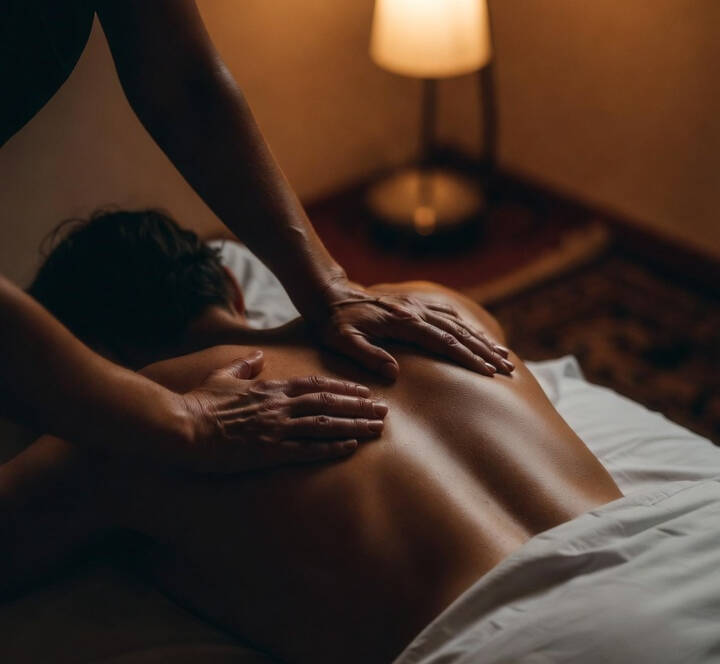
Think of the sensation of a palm traveling along the back on an oiled surface. In scrolling the characteristic is the displacement of the contact point as the position of the hand changes. You can feel small successive contacts that come together rhythmically and give the impression of progress even when a short distance is covered. This helps explain why a session with a limited geographical extent can be very varied in touch. The practitioner has options beyond whether to apply more or less force.
Push gives different information. There is a noticeable pull in one direction and often a reset for the next move. In grasping and kneading the contact may embrace more of an area. As a visitor, you don’t have to wonder which name corresponds to each movement. But it is worth knowing that you can ask for the previous feeling. “I liked that rhythmic movement of your shoulder earlier” is enough information to get along.
Clothing, covering and relation to fabric
Many sessions take place over comfortable clothing or with the mediation of fabric. This changes how traffic is transmitted. A thin T-shirt that stays in place allows you to feel the displacement of the contact quite clearly. A sweatshirt with zippers, thick seams, or a stiff print can fold up and get in the way when you lie down. If you’re coming from the office, ask if you need to bring something comfortable to change into. This way you will know how much time the visit takes in total.
Some modern descriptions combine elements of Tui Na with oil or other forms of massage in the same appointment. If you chose the method because you want to stay clothed, don’t let that be implied. You can say “I want all the contact to be over the clothes, is that the format you offer?”. The answer will help you more than a debate about which version is authentic. For personal experience, what counts is exactly what was agreed upon and what can be adjusted.
What changes when the session includes motion
The list may refer to mobilizations or mild movements of the limbs. These terms have a broad meaning in everyday use. Ask for an example in plain language. Will the hand stay on the table during contact? Will it move to another position? Will you need to be actively involved or will you just be asked to let it rest? Even if you have experience with stretch massages, don’t assume that the same sequence will be followed or that you know the position your body will take.
You can agree to stick to static and rhythmic contacts only. Especially in the first meeting, this gives the opportunity to understand the speed and stability of the hands before deciding if you want more movement. If a shift seems uncomfortable, you say so immediately and return to a position where you feel safe. Sharp neck manipulations are a different matter than a wellness session. Booking a massage does not constitute consent to any action included in the practitioner’s wider training.
How does the shiatsu and thai massage experience compare
The idea that you can stay clothed is often confusing. If you remember pauses and steady pressures from shiatsu, you may recognize some kinship in the feel of certain moments. In Tui Na, however, you may encounter more rapid transitions, kneads or rolls than you expect. In Thai massage repositioning and assisted movements may play a more prominent role. These are indicative differences. A particular session may borrow elements or be limited to a few manipulations depending on its goal.
If you are trying to choose between these three options, describe something you remember enjoying. “I liked the contact over the clothes and I want to stay in the same position for a long time” is a starting point. “I want my hand to move and there to be a change in posture” is another. A clear list can guide you better when you have such a preference. Otherwise there is a risk of choosing based on the country of origin, while what interests you is the pace.
An example for a person who wants to try the technique
Imagine that you want to know Tui Na and you prefer attention to the hands. In the first conversation say that you want to feel the difference between thrusting and kneading, without going through many areas. The practitioner can explain where to rest your forearms and how to switch sides. When the session begins you will have two specific impressions to compare. In the end you may find that you like the rhythmic repetition, while the more localized contact wears you down early.
Conversely, someone coming in expecting to work the whole body needs to know how long each position will last. If time is limited, travel and preparation can take up a large part of it. Ask which areas will be prioritized and what can be skipped. The result of the discussion may be a shorter but clearer plan. The quality of a first acquaintance is also judged by whether you remember what you tasted when you leave the place.
What to look for in health descriptions
Research on a traditional method usually examines specific people, a specific problem, and a program with specific applications. You can’t take a result for a group of patients and take it straight to a wellness appointment. The qualifications of the professional, the purpose, the duration and the way of monitoring differ. If a listing makes general treatment promises, ask what exactly it means and what service is being provided. The answer must remain comprehensible even without the jargon of tradition.
If you are looking for an explanation for new pain, weakness or numbness, consult a health professional before choosing procedures. In a wellness session you can request a change of place, skip an area or stop. This feature has value even when you feel good and are just trying something new. A quiet room, plenty of time for questions, and a clear description of what’s to come are more tangible selection criteria than a generic adjective like “powerful” or “energetic.”
Before confirming your own reservation
Ask to know who will be conducting the session and how they were trained in this particular method. A helpful answer describes the subject of the training and the format of the appointment offered today. Also ask if the duration refers to the time of contact or the entire visit. This is especially important if you need to change clothes or if you want to discuss first what the session will involve. Finally, confirm the total price to compare two different proposals equally.
A final point concerns temperature and stillness. When you stay dressed, you might think it’s impossible to catch a cold, especially if you walked to the appointment. A few minutes later the feet may need covering while the hands are worked on. You can ask for a blanket before you start or have it available by the table. If the session is on a low floor, ask if you will have room to lean on when you stand up. Such questions are about room setup and can usually be answered long before you arrive.
What remains of a first acquaintance
In the end try to describe the experience without any special words. For example, “I liked when the arm rolled while staying on the same side, but I would have preferred a longer pause before we switch shoulders.” This sentence already gives two practical instructions for next time. If instead you only remember that the session was fast, ask yourself what point created that feeling. It could have been the pace of the scrolling or just the many position changes in a short amount of time.
Getting really familiar with Tui Na is easier when you let the method show its differences on a small scale. A repeated movement, a better supported hand and a clear choice for the next area are enough to form a personal opinion. With these observations you can decide if you want a longer duration or if you prefer another form of contact on your next appointment.